

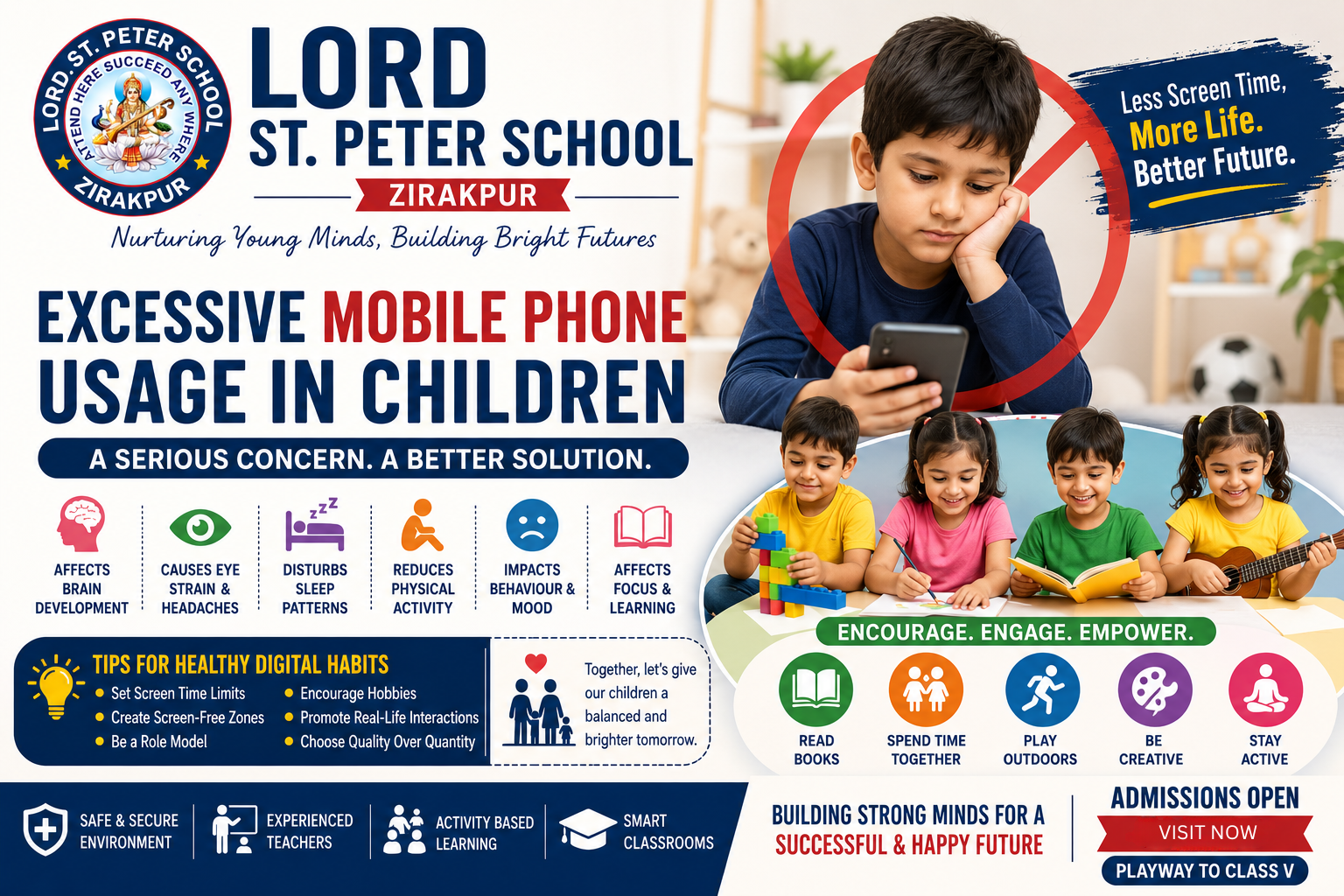
Is Your Child Spending Too Much Time on Mobile Phones?
In today’s digital world, mobile phones have become a part of everyday life. Whether it’s online learning, watching cartoons, playing games, or scrolling through videos, children are spending more time on screens than ever before.
While technology has made education more accessible, excessive mobile phone usage in children has become one of the biggest concerns for parents, teachers, and child development experts.
Many parents often ask:
- How much screen time is too much?
- Can mobile phones affect my child’s brain development?
- Why does my child become angry when I take the phone away?
- How can I reduce my child’s screen addiction?
If these questions sound familiar, you’re not alone.
At Lord St. Peter School, Zirakpur, we believe technology should support learning—not replace childhood. In this guide, we’ll explore the effects of excessive mobile phone usage and share practical strategies to help your child develop healthier digital habits.
Mobile Phones Are Helpful—but Balance Is Essential
Let’s begin with an important point.
Mobile phones are not the enemy.
Educational apps, interactive learning platforms, video lessons, and digital books can be valuable learning tools when used responsibly.
The concern begins when screen time replaces:
- Outdoor play
- Family conversations
- Reading books
- Creative activities
- Physical exercise
- Proper sleep
- Face-to-face friendships
Children need a balanced lifestyle to grow emotionally, socially, and intellectually.
The Growing Screen Time Problem
According to child development experts, many young children now spend several hours each day on smartphones or tablets.
What often starts as “just 10 minutes” gradually becomes:
- One more cartoon
- One more game
- One more video
Before parents realize it, several hours have passed.
This growing dependence can affect many aspects of a child’s development.
How Excessive Mobile Usage Affects Brain Development
The early years are critical for brain development.
Young children learn by:
- Touching
- Exploring
- Building
- Asking questions
- Playing
- Talking
- Observing
Passive screen consumption cannot fully replace these real-world experiences.
When children spend too much time on mobile devices, they may have fewer opportunities to develop:
- Problem-solving skills
- Creativity
- Communication
- Emotional regulation
- Social interaction
Learning through real experiences remains essential for healthy development.
Impact on Concentration and Learning
One common complaint from teachers is reduced attention span.
Fast-paced videos and games constantly stimulate the brain with quick rewards.
As a result, children may find it harder to:
- Sit quietly in class
- Focus on lessons
- Complete homework
- Read books
- Listen to instructions
Over time, this can affect classroom performance and learning habits.
Sleep Problems Caused by Mobile Phones
Many children now use mobile phones before bedtime.
The blue light emitted by screens can interfere with the body’s natural sleep cycle.
Poor sleep may lead to:
- Difficulty waking up
- Irritability
- Reduced concentration
- Poor memory
- Low energy during school
A well-rested child learns better, behaves better, and enjoys school more.
Effects on Eyesight
Extended screen use can strain young eyes.
Children may experience:
- Dry eyes
- Blurred vision
- Headaches
- Eye fatigue
Regular outdoor play and limiting continuous screen use can help reduce eye strain.
Reduced Physical Activity
Childhood should be filled with movement.
Running, jumping, cycling, climbing, and outdoor games help children develop:
- Strong muscles
- Better coordination
- Healthy bones
- Physical fitness
Excessive screen time often replaces these activities, contributing to a more sedentary lifestyle.
Social Skills May Be Affected
Children learn important life skills through interaction.
Playing with friends teaches them:
- Sharing
- Patience
- Teamwork
- Empathy
- Communication
- Conflict resolution
When most free time is spent alone with a device, these valuable experiences may become limited.
Emotional and Behavioural Changes
Some parents notice behavioural changes when screen time becomes excessive.
These may include:
- Irritability
- Mood swings
- Tantrums when the phone is taken away
- Reduced interest in family activities
- Difficulty managing emotions
Healthy routines and balanced activities can help children regulate their emotions more effectively.
Signs Your Child May Be Overusing Mobile Phones
Parents should watch for signs such as:
- Constantly asking for the phone
- Becoming upset when screen time ends
- Losing interest in toys or outdoor play
- Reduced attention during conversations
- Difficulty sleeping
- Declining school performance
- Avoiding family interaction
Recognizing these signs early allows parents to make positive changes before habits become deeply established.
Practical Tips to Reduce Screen Time
Reducing screen time doesn’t have to be a battle. Small, consistent changes can make a big difference.
Set Daily Limits
Create age-appropriate screen time rules and stick to them consistently.
Create Screen-Free Zones
Keep dining tables and bedrooms free from mobile devices.
Encourage Outdoor Play
Outdoor activities improve physical health, creativity, and emotional well-being.
Read Together
Storybooks strengthen language skills and imagination while creating meaningful family time.
Enjoy Creative Activities
Encourage drawing, painting, puzzles, music, crafts, and building blocks.
Spend Quality Family Time
Simple activities like cooking together, gardening, or board games help strengthen family relationships.
Be a Role Model
Children learn by observing adults. Limiting your own screen time encourages healthier habits for the entire family.
Technology Should Support Learning
At Lord St. Peter School, technology is used thoughtfully to enhance education—not replace meaningful learning experiences.
Our classrooms combine:
- Smart Classrooms
- Activity-Based Learning
- Storytelling
- Art & Craft
- Music & Dance
- Interactive Discussions
- Creative Projects
- Hands-On Activities
Children benefit from technology while still enjoying active, engaging, and balanced learning experiences.
Why Activity-Based Learning Matters
Children remember more when they learn by doing.
Hands-on activities help develop:
- Confidence
- Creativity
- Communication
- Critical thinking
- Curiosity
This balanced approach supports healthy brain development while keeping learning enjoyable.
Building Healthy Digital Habits Together
Healthy digital habits are built gradually.
Parents can help children by:
- Creating consistent routines
- Encouraging hobbies
- Limiting recreational screen time
- Promoting physical activity
- Celebrating offline achievements
The goal is not to eliminate technology but to use it wisely.
How Lord St. Peter School Supports Healthy Child Development
At Lord St. Peter School, we believe childhood should be active, joyful, and filled with meaningful experiences.
Our students enjoy:
- Smart Learning
- Art & Craft
- Yoga
- Dance & Music
- Indoor Activities
- Educational Games
- Storytelling
- Personality Development
- Cultural Celebrations
- Interactive Classrooms
These experiences help children develop academically while building confidence, creativity, and strong social skills.
Final Thoughts
Mobile phones are an important part of modern life, but childhood should never be lived entirely through a screen.
Children need time to explore nature, make friends, ask questions, create, imagine, and learn through real experiences.
With balanced technology use, supportive parenting, and an engaging school environment, children can enjoy the benefits of the digital world without sacrificing healthy development.
At Lord St. Peter School, Zirakpur, we are committed to nurturing well-rounded learners by combining quality education, activity-based learning, strong values, and healthy digital habits.
Together, parents and teachers can help children build a brighter, healthier future.
Frequently Asked Questions
How much screen time is recommended for young children?
Experts generally recommend limiting recreational screen time for young children and ensuring it does not replace sleep, physical activity, reading, or family interaction.
Can excessive mobile phone use affect my child’s learning?
Yes. Too much screen time may reduce attention span, affect concentration, and interfere with healthy learning habits if not balanced with other activities.
What are the signs of mobile phone addiction in children?
Common signs include irritability when devices are removed, excessive demand for screen time, loss of interest in outdoor play, sleep disturbances, and reduced interaction with family.
How can parents reduce screen time without arguments?
Introduce gradual limits, create engaging offline activities, establish screen-free family time, and lead by example with healthy digital habits.
How does Lord St. Peter School encourage balanced development?
We combine smart learning with activity-based education, creative arts, storytelling, yoga, music, outdoor experiences, and personal attention to support every child’s academic, physical, and emotional growth.